
Introduction: The Day I Met Myself
There are moments in life that quietly divide our stories into two chapters. Before and after. Most people do not recognize those moments while they are happening. They seem ordinary at first—a conversation, an unexpected phone call, a rejection letter, a diagnosis, a resignation, or even a simple report card. Yet, in retrospect, they become turning points that redirect the course of our lives.
For me, one such moment arrived through something as ordinary as an end-of-term examination result in Class Seven.
Like every student, I eagerly waited for the report cards to be released. I expected to perform above average. I knew my intellectual ability, and although I cannot claim that I had worked as hard as I should have during that term, I certainly did not expect to find myself among the poorest-performing students.
When the class teacher finally released the results, I carefully scanned the list. My eyes moved slowly from the top, past the middle, then further down, and finally, they stopped.
At first, I thought I had made a mistake. I read the names again. Then a third time. There was no mistake. I had tied for the last position in the class.
For a few moments, I simply stared at the report card in disbelief. The classroom around me seemed unusually quiet, although I knew other students were celebrating, comparing marks, and discussing their performance. Inside me, however, another conversation had begun.
"How could this happen?"
What shocked me even more was the name beside mine. The student with whom I shared the last position was someone I genuinely believed I was academically stronger than. This was not arrogance or disrespect toward my classmate. It was an honest assessment based on our classroom interactions, assignments, and previous performance.
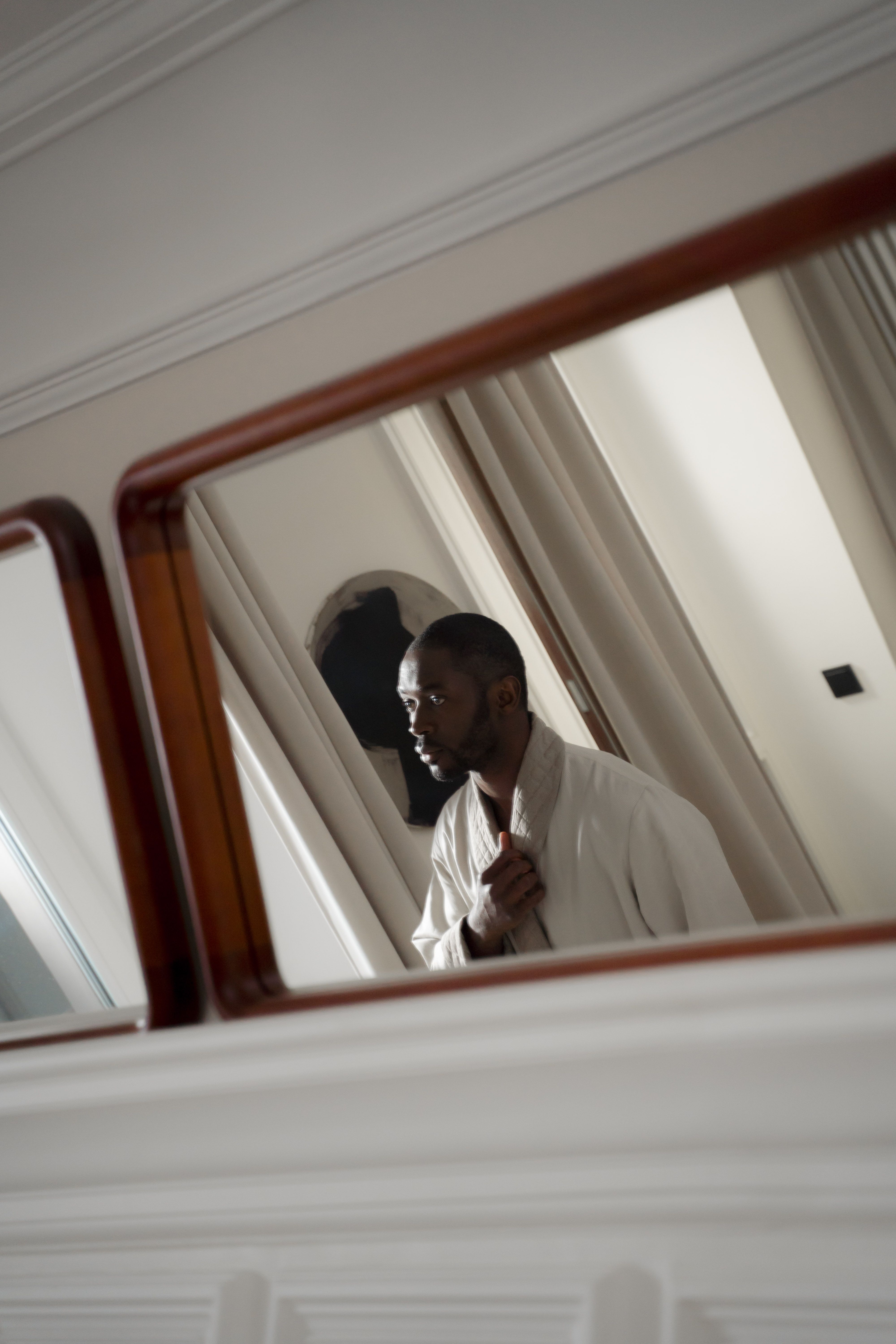
The realization unsettled me. Somewhere along the journey, I had become less than I knew I was capable of becoming. That report card did something no teacher had ever done. No friend had done. Certainly, no motivational speech had done. It held up a mirror. And the mirror did not lie.
Looking back today, I no longer consider that report card one of the worst moments of my education. I consider it one of the greatest gifts I ever received. Because on that day, I was forced to confront the most important person I would ever have to change.
Myself.
The Mirror We Often Avoid
Human beings naturally prefer information that confirms what they already believe about themselves. Psychologists refer to this tendency as confirmation bias, our inclination to seek information that reinforces our existing beliefs while dismissing evidence that challenges them.
We enjoy compliments because they affirm us. We appreciate praise because it validates us. We instinctively defend ourselves when criticized because criticism threatens the identity we have constructed.
This tendency is understandable. None of us enjoys discovering that we have fallen short of our own expectations. Yet, if we are honest, genuine transformation rarely begins with affirmation. It begins with confrontation. It begins with the courage to allow reality to speak.
Leadership scholar Peter Drucker famously observed: "What gets measured gets managed." Although Drucker was writing about management, the principle applies equally to personal growth. We cannot improve what we refuse to examine.
Similarly, psychologist Carol Dweck, whose pioneering work on the Growth Mindset has transformed educational psychology, argues that successful people view setbacks differently. They do not interpret poor performance as evidence of limited intelligence or permanent inability. Instead, they interpret it as valuable information about what needs to change.
That distinction changes everything. Failure is no longer a verdict. It becomes feedback.
The report card did not tell me who I was. It revealed where I was.
Those are two entirely different realities. Who we are speaks to our potential. Where we are simply describes our present position. One can change. The other continues to unfold throughout life. Unfortunately, many people confuse the two.
- A failed examination becomes: "I am a failure."
- A rejected job application becomes: "I am not good enough."
- A struggling business becomes: "Perhaps I am not meant to succeed."
Yet reality says something very different.
A disappointing outcome merely tells us where we currently stand. It says nothing about where we can eventually arrive. That distinction is one of the most liberating discoveries anyone can make.
When Reality Creates Cognitive Dissonance
Looking back, I now understand why that report card disturbed me so deeply.
Psychologist Leon Festinger described this inner conflict through his Theory of Cognitive Dissonance. Cognitive dissonance occurs whenever reality collides with our self-image.
Before receiving my results, I believed I was a capable student. The report card suggested otherwise. Those two realities could not comfortably coexist. Something had to give way.
Whenever people experience cognitive dissonance, they generally respond in one of two ways.
The first response is to protect the ego. We explain away the results.
- Perhaps the teacher was unfair.
- Perhaps the examination was unusually difficult.
- Perhaps other students received special treatment.
- Perhaps circumstances prevented us from performing well.
Sometimes these explanations are valid. More often, however, they become convenient shelters that protect us from uncomfortable truths. The second response requires far greater courage.
Instead of asking, "Who is responsible?" we ask, "What must I change?"
That single question has transformed countless lives. It transforms failure into feedback. Embarrassment into education. Disappointment into determination.
Growth begins the moment we stop defending our current position and start improving it.
The report card became one of my earliest lessons in personal responsibility. Not because I enjoyed the experience. Far from it. But because I discovered that reality is often a kinder teacher than denial. Denial postpones growth. Truth accelerates it.
My Mother's Quiet Intervention
What happened after those disappointing results shaped my life far more profoundly than the report card itself.
My late mother, Mary Achieng', never went beyond Class Seven under Kenya's former 7-4-2-3 education system. By conventional standards, many would not have considered her highly educated. Yet she possessed a wisdom that no formal qualification could measure.
She understood something about learning that many educated people still fail to appreciate.
She did not shout at me. She did not compare me with children who had performed better. She did not remind me of my disappointing position in class. Neither did she make me feel like I had become a disappointment to the family. Instead, she quietly began changing my environment.
She encouraged me to read. Not occasionally. Consistently.
Looking back today, I realise she never became obsessed with my grades. She became interested in something far more important.
My habits.
She seemed to understand instinctively that lasting transformation rarely begins by chasing better results. It begins by cultivating better disciplines. She believed that if I developed a love for reading, improved performance would eventually become a natural consequence.
Years later, I discovered that educational psychology strongly supports what my mother practiced intuitively. Children rarely become lifelong learners because they are repeatedly told to perform well. They become lifelong learners because someone helps them fall in love with learning itself. My mother never studied educational psychology. She simply understood people.
Today, I consider that one of the greatest gifts she ever gave me.
Reading Is More Than Acquiring Information
Many people associate reading with examinations. Children read to pass tests. College students read to earn certificates, diplomas and degrees. Professionals read only when they need to complete a certification or solve an immediate problem.
Then, somewhere along the journey, many stop reading altogether.
The tragedy is that they also stop growing.
Reading was never meant to end with formal education. It is one of the few disciplines capable of transforming a person's thinking throughout life. Every meaningful book introduces us to ideas, experiences, and perspectives that we might never encounter through our own circumstances.
Author Charlie "Tremendous" Jones is often quoted as saying:
"You will be the same person in five years except for the people you meet and the books you read."
Whether or not one agrees entirely with the statement, its central message is difficult to ignore. Books shape thinking and thinking shapes decisions. Over time, decisions shape destiny.
Neuroscientists have increasingly demonstrated that deep reading strengthens the brain's capacity for concentration, reasoning, memory, empathy, and critical thinking. Research by cognitive neuroscientist Maryanne Wolf suggests that the act of deep reading develops neural pathways that enable us not merely to gather information but to analyze, question, imagine, and reflect.
Books do not simply fill the mind. They reshape it.
Looking back, I now understand that my mother was never merely encouraging me to read. She was teaching me how to think. That distinction has influenced every stage of my life.
A Habit That Outlived the Classroom
The habit my mother quietly cultivated did not end when I completed primary school.
It followed me into secondary school. Into college. Into my professional career. Into project management and leadership. And eventually, into writing The Shoeless Visionary itself.
One observation that Ruth Omondi makes in the opening chapter of my biography continues to make me smile because it captures a habit that has remained with me for decades. She notes that I rarely move around without carrying at least one book in my backpack and that whenever an opportunity presents itself, I read. If I cannot carry a physical book, I access digital resources because learning has become part of my daily routine.
People sometimes ask me how I manage multiple responsibilities—project management, proposal development, mentoring, farming, business initiatives, writing, and continuous learning. The answer is neither extraordinary intelligence nor exceptional talent. It is curiosity. Reading taught me that every problem someone else has solved contains a lesson that can shorten my own journey.
Every biography allows us to borrow experience without paying the full price of making the same mistakes. Every leadership book introduces us to ideas refined through decades of practice. Every research publication stretches our thinking beyond yesterday's assumptions.
I no longer read because I want to pass examinations. I read because I never want to stop becoming.
That, perhaps, is one of the greatest differences between education and learning.
Two Mothers. One Philosophy.
As I reflected on my own journey while writing this essay, I found myself thinking often about Sonya Carson, the mother of world-renowned neurosurgeon Dr. Ben Carson.
Although separated by continents, cultures, and life circumstances, Sonya Carson and my mother, Mary Achieng', shared something remarkable. Neither possessed advanced formal education beyond primary. Neither enjoyed material wealth. Neither had access to educational psychology textbooks. Yet both understood a timeless principle.
If you shape a child's habits, you shape the child's future.
Sonya Carson reduced television time, insisted her sons read books every week, and required them to write reports about what they had read. She believed books could introduce her children to possibilities that their immediate environment could not provide.
My mother adopted a quieter approach. She encouraged reading. She celebrated learning. She never allowed temporary setbacks to become permanent labels.
She may never have used terms such as growth mindset, neuroplasticity, or lifelong learning, yet she lived those principles naturally.
Looking back today, I realize that she was educating not merely a student. She was nurturing a visionary.
The greatest educators are not always those who stand before classrooms. Sometimes they stand quietly in kitchens. Sometimes they sit under trees. Sometimes they sacrifice silently so that their children may inherit opportunities they themselves never had. Their lessons rarely appear on certificates. They appear in lives.
Growth Begins When Identity Changes
Psychologist Carol Dweck argues that the most significant difference between people who flourish and those who stagnate is not intelligence. It is mindset.
Her research distinguishes between what she calls the fixed mindset and the growth mindset.
A fixed mindset interprets failure as evidence of personal limitation.
- "I failed because I am not intelligent enough."
- "I am simply not good at mathematics."
- "Leadership is for other people, not me."
The growth mindset tells a very different story.
- "I have not mastered this yet."
- "My current strategy is insufficient."
- "What must I learn to improve?"
Notice what changes. Identity remains intact. Strategy changes.
This distinction profoundly influenced my own journey. After that disappointing report card, I could have quietly accepted an identity of mediocrity. Many people do.
- One disappointing experience becomes a lifelong definition.
- One rejection becomes proof that they are incapable.
- One business failure convinces them they are not entrepreneurs.
- One painful relationship persuades them they are unworthy of love.
Yet life continually reminds us that outcomes are temporary. Identity is continually being shaped.
I gradually stopped asking myself, "Am I intelligent enough?"
Instead, another question began to guide my thinking.
"What kind of person must I become?"
That question changed everything. It redirected my attention away from comparison and toward growth. Away from proving myself. Toward improving myself.
Years later, that same mindset would motivate me to pursue further studies while working full-time, develop new professional competencies, lead increasingly complex programmes, write funding proposals, mentor young people, and eventually document my life's journey through The Shoeless Visionary.
Looking back, I realize that the greatest transformation did not occur in my report card. It occurred in my identity. I no longer saw learning as something I did. I began seeing learning as part of who I was.
And when identity changes, behaviour eventually follows.
Honest Mirrors Build Better Leaders
As life unfolded, I discovered that the lesson hidden in that report card extended far beyond academics. It was preparing me for leadership. Leadership begins long before someone receives a title, occupies an office, or manages a team. It begins the moment a person develops the courage to examine himself honestly.
In fact, I have come to believe that the quality of our leadership is directly proportional to the quality of our self-awareness.
Leadership is often described in terms of vision, influence, communication, or decision-making. While these are undoubtedly important, they all rest upon a deeper foundation:
The ability to tell ourselves the truth.
Daniel Goleman, whose work on Emotional Intelligence transformed modern leadership thinking, identifies self-awareness as the cornerstone of emotional intelligence. Before we can manage relationships, lead organizations, resolve conflicts, or inspire others, we must first understand ourselves.
Self-awareness asks uncomfortable questions.
- Why did I react that way?
- Why do I become defensive when I receive criticism?
- Why do I repeatedly make the same mistakes?
- What assumptions am I holding that no longer serve me?
These questions are uncomfortable because they expose our blind spots. Yet blind spots do not disappear simply because we ignore them.
Every leader needs mirrors. Not mirrors that flatter. Mirrors that reveal.
Throughout my career, I have learnt to welcome feedback, even when it is uncomfortable. Whether managing projects, leading teams, developing funding proposals, or mentoring young professionals, I have discovered that growth accelerates whenever we replace defensiveness with curiosity.
The report card taught me that lesson long before I understood the language of leadership. It taught me that truth is not our enemy. Truth is our guide.
The Danger of Protecting Our Ego
One of the greatest obstacles to personal growth is not failure. It is pride.
Pride has an extraordinary ability to protect our self-image, even when reality is quietly asking us to change.
Modern society often encourages relentless positivity. We are told to believe in ourselves. To think positively. To ignore negativity.
There is value in optimism. But optimism without honesty eventually becomes self-deception.
- We celebrate participation without evaluating performance.
- We praise effort without asking whether the effort was effective.
- We avoid difficult conversations because we fear hurting feelings.
In doing so, we sometimes protect people's comfort at the expense of their growth. The highest performers in every profession understand something different. Elite athletes analyse recordings of their mistakes. Musicians repeatedly listen to imperfect performances. Pilots conduct detailed post-flight reviews. Doctors evaluate clinical outcomes to improve patient care.
Successful organizations conduct After-Action Reviews after major projects, not because they enjoy criticism, but because they understand that every mistake contains information.
Growth requires feedback. Feedback requires humility. Humility requires courage. And courage begins with looking honestly into life's mirror.
The SOLVIS Principle: Every Visionary Needs a Mirror
One of the convictions emerging from my own journey is this:
Vision without reflection easily becomes illusion.
Many people spend years developing ambitious dreams while neglecting the one person responsible for fulfilling them—themselves. We often ask:
- "How can I change my family?"
- "How can I transform my organization?"
- "How can I influence my community?"
These are worthwhile questions. But perhaps there is another question that deserves to come first.
"How must I change before I can effectively influence others?"
Purposeful living always begins with self-leadership. Long before we manage organizations, we manage habits. Long before we influence teams, we influence our own thinking. Long before we shape society, society is quietly being shaped by the decisions we make every day.
At SOLVIS, we therefore encourage every visionary to regularly stand before three mirrors.
The Mirror of Performance
What are my current results honestly telling me? — Do not explain them. Understand them.
The Mirror of Character
Who am I becoming through my daily habits? — Success is rarely the product of occasional decisions. It is usually the outcome of repeated disciplines.
The Mirror of Learning
What knowledge, skills, or perspectives must I develop to reach the next level? — Growth stops whenever learning stops. Vision continues growing only when the mind continues expanding.
Without these three mirrors, personal growth becomes guesswork. With them, growth becomes intentional.
The SOLVIS Quote
"The report card did not tell me who I was. It revealed where I was."
Practical Reflections for SOLVIS Participants
Whenever life confronts you with disappointing results, resist the temptation to immediately defend yourself. Instead, pause and reflect. Allow reality to become your teacher.
Ask yourself these five questions.
- What is reality trying to teach me?
Separate facts from emotions. Pain often speaks the truth before comfort does.
- Which habits produced these results?
Our future is rarely determined by isolated decisions. It is shaped by repeated behaviours.
- What new knowledge do I need?
Every weakness points toward an opportunity for learning. Do not fear what you do not yet know. Pursue it.
- Who can help me become better?
Seek mentors. Read biographies. Study great thinkers. Listen to honest friends. Growth is rarely a solitary journey.
- What decision will I make today?
Not tomorrow. Not next year. Transformation begins with one courageous decision made today.
Reflection for the Visionary
Today, when I think about that report card, I no longer remember the embarrassment. I remember the beginning. I remember a quiet mother who believed that books could accomplish what punishment never would. I remember a disappointment that refused to remain a disappointment. I remember a mirror that loved me enough to tell me the truth. Most importantly, I remember discovering that our greatest breakthroughs often arrive disguised as our greatest setbacks.
The report card lasted one school term. The lesson has lasted a lifetime.
Every meaningful achievement in my life has, in one way or another, been influenced by the decision I made after that moment.
To learn, to grow, and to become.
Perhaps that is why I no longer fear honest feedback. I fear something else. I fear living comfortably with unrealized potential. Because there is a tragedy greater than failure. It is reaching the end of life without ever becoming the person you were capable of becoming.
If life places a mirror before you today, do not turn away. Look carefully. Not to condemn yourself. Not to compare yourself with others. But to discover the next version of yourself waiting to emerge.
The mirror is not your enemy. It is your teacher. The person you become tomorrow will largely depend on your willingness to honestly confront the person you are today.
The SOLVIS Reflection
At Solve With Vision (SOLVIS), we believe that purposeful living begins with the courage to tell yourself the truth. Honest self-assessment is not an act of self-condemnation but the starting point of transformation. Every setback is an invitation to learn, every piece of feedback is an opportunity to grow, and every day offers a new chance to become a better version of yourself. Face reality with humility. Learn with curiosity. Grow with purpose.
References
- Carson, B., & Murphey, C. (1992). Gifted Hands: The Ben Carson Story. Zondervan.
- Drucker, P. F. (2006). The Effective Executive. Harper Business. (Original work published 1967.)
- Dweck, C. S. (2006). Mindset: The New Psychology of Success. Random House.
- Festinger, L. (1957). A Theory of Cognitive Dissonance. Stanford University Press.
- Goleman, D. (1995). Emotional Intelligence. Bantam Books.
- Wolf, M. (2007). Proust and the Squid: The Story and Science of the Reading Brain. HarperCollins.